Knitting Project
Knitting project in Kathmandu – a support for woman
The project was developed to support women and improve their standard of living. Nepal faces various challenges, which are particularly evident in the form of poverty, poor education and healthcare systems, high population growth and unemployment, especially amongst disadvantaged women. Traditional gender roles place women at a particular disadvantage.
Pro Nepal initiated the purchase of knitting machines. Our local partners, SEO, are managing this important project and have secured premises for it.
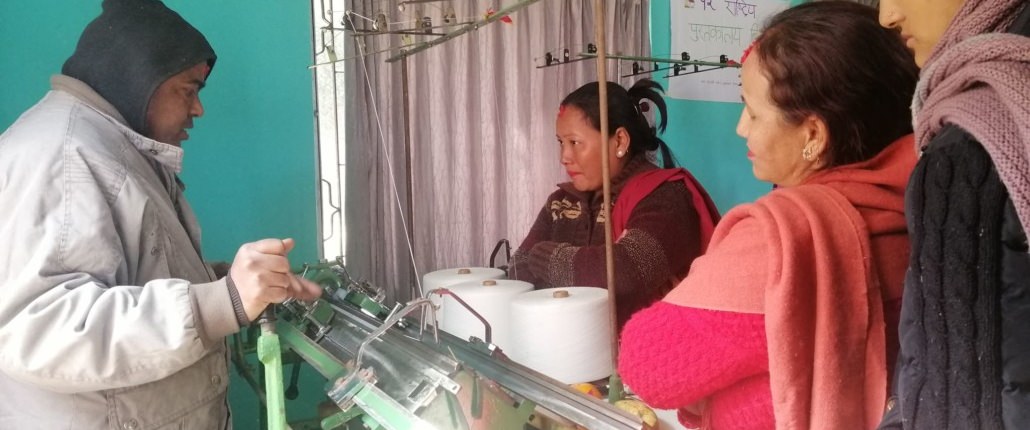
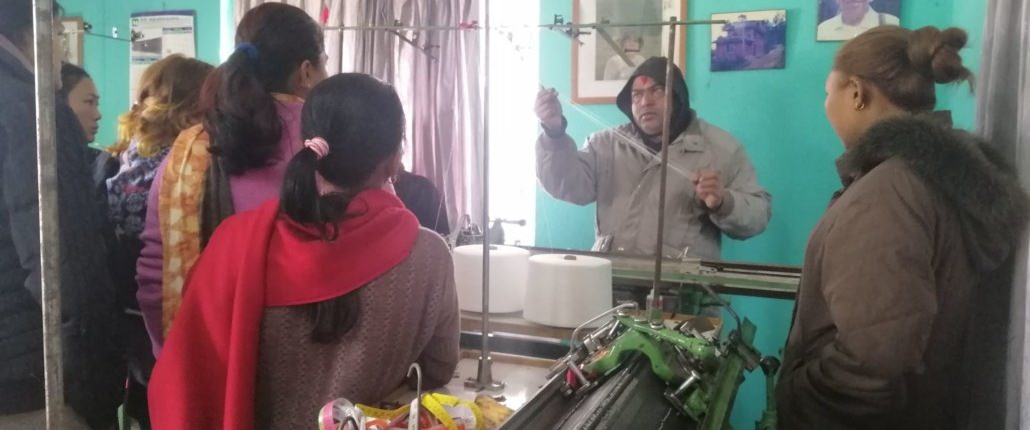
Although originally planned for 2019, the first phase of the project did not begin until after the pandemic, in February 2021, with a course for women in Sanga who wished to take part in the knitting project. The aim is to provide the women with a means of livelihood. Knitting is intended to offer them the opportunity to set up their own business or to work in a knitting workshop.
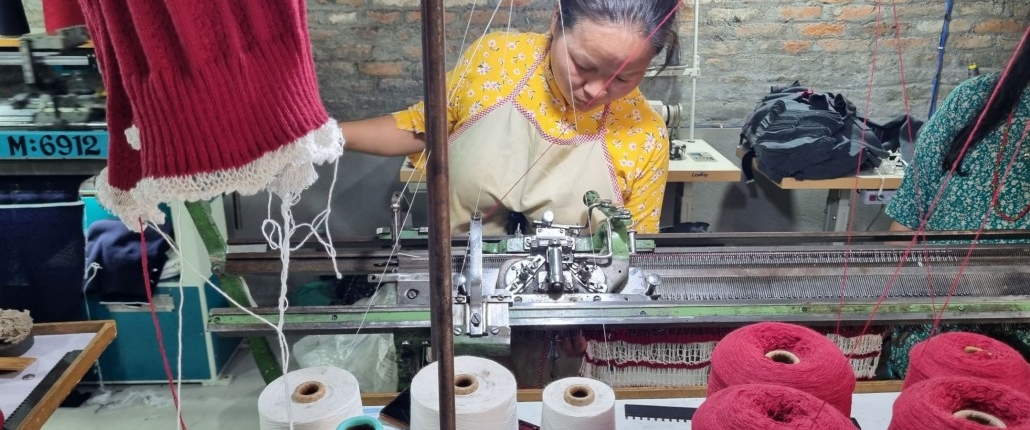
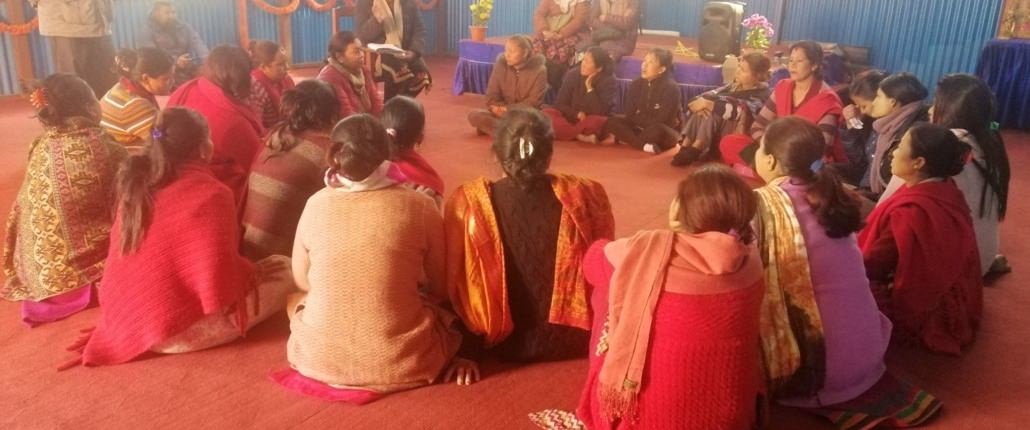
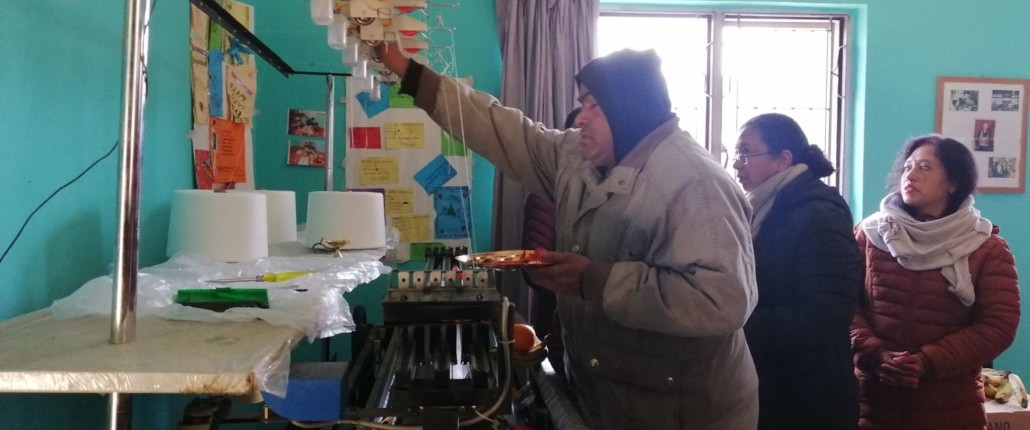
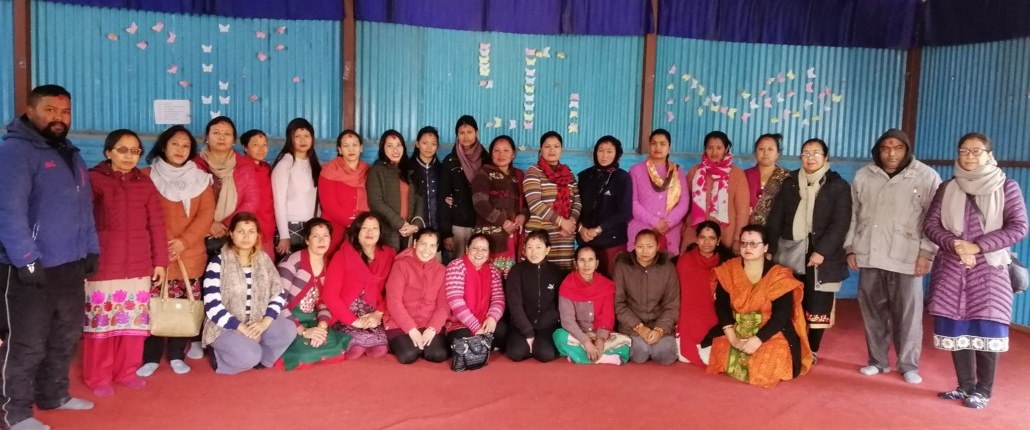
The second phase took place from November 2021 to May 2022 in Khushibun, Kathmandu. Around 20 women learnt how to use manual and semi-automatic knitting machines, as well as how to maintain them. Among other items, they produced jumpers, cardigans, hats and scarves. Some of the graduates subsequently received further support and were able to take on their first paid work.
The third intake ran from July 2022 to January 2023. The participants were trained in two groups and received materials and meals free of charge. Women who had already completed the training worked on the project as skilled workers, producing items such as school jumpers. A visit to the project revealed a very positive learning atmosphere: many women developed new self-confidence and career prospects.
From 2023 onwards, no further large-scale course was held for the time being. Instead, ProNepal continued to support individual women by providing production spaces, trainers and additional knitting machines. The costs of rent and further equipment were also covered.
In 2024 and 2025, the project continued on a smaller scale, including the funding of a buttonhole machine and the course rooms.
In 2026, the project continues to receive support from ProNepal to cover the rental costs.


